English Muffin
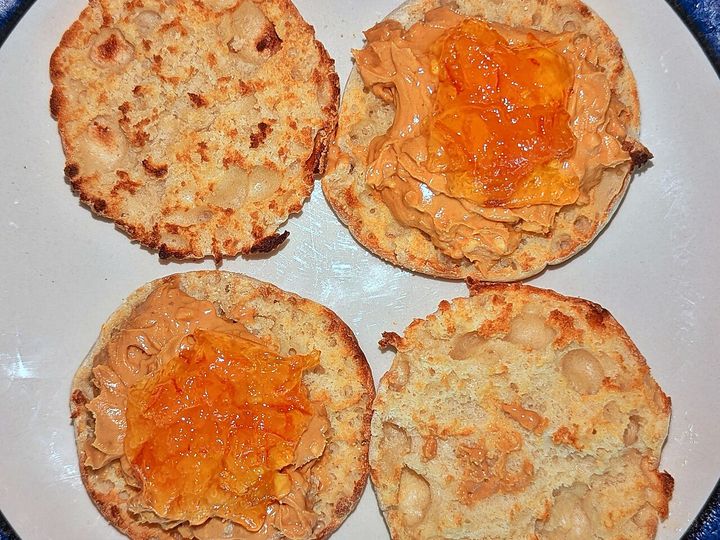
A fork-split, griddled muffin with a pocked interior made to catch gravy. The breakfast-sandwich bread that also serves as a plated gravy base.
| Category | Toasts & Bases |
|---|---|
| Origin / Region | New York, from England |
| Classic base | Sausage gravy, eggs and gravy |
| Prep time | 3 to 4 minutes to toast |
| Storage | Sealed at room temperature or frozen; refresh in the toaster. |
| Shelf life | Keeps a week sealed; freezes excellently |
| Best uses | Breakfast plates, gravy bases, egg dishes |
| Substitutes | A split-top roll; a biscuit for the Southern plate |
| Last checked | October 18, 2026 |
About it
The English muffin's American story begins in New York in the 1880s, when Samuel Bath Thomas began baking them. Fork-splitting, not slicing, is the law of the house: a knife ruins the texture gravy wants to fill.
Making it
Fork-split the muffin around its equator, then toast until the ridges crisp. Butter lightly. The interior should stay rough; every ridge is a gravy shelf.
Serving it
As a plated base under sausage or milk gravy, and beneath eggs at diner breakfasts. Halves take a measured half-ladle each.
Swaps & pairings
Whole-grain muffins hold heavier gravies. As the base for creamed chipped beef it makes a Northern diner SOS.
More from this region: New England Diners